

| Click the individual links below to move to its Photo Page |
| Plant Name |
Habit |
Zone |
Rate |
Color |
Description |
| Picea pungens 'Bonny Blue' |
Upright Broad |
2 |
Large |
Blue |
Very short needles earned this selection its name and fame. The tiny, narrow needles are bright blue and they are closely arranged with an angle that is acute to the stem. Slower growing than the species when young, the tree, selected by Roger Mackiness, Corbett, Oregon, matures into a large formal stature. |
|
Upright Broad |
2 |
Intermediate |
Blue |
For a brighter blue and faster growth, this dense, compact selection of dwarf Colorado Blue Spruce beats the competition. An attractive, broad, blue bush, it boasts low, horizontal branches and longer, sharp-tipped, curved needles held at a wider angle. |
|
Upright Broad |
2 |
Large |
Blue |
So easy and shapely, this outstanding, blue-needled tree produces a strong, naturally-straight leader and a full, pyramidal form as both a young plant and a mature tree. Part of the Jean Iseli Signature series, it was personally selected by Jean from thousands of seedlings and whimsically named by Don Howse, a longtime friend of the nursery and self-proclaimed "plant addict." A perfect and predictable Colorado Blue Spruce, it requires no staking or training to achieve its outstanding, formal stature. The uniformity of this cultivar has allowed it to establish itself as a standard in the trade. |
|
Upright Broad |
2 |
Large |
Blue |
Exceptional color and classic pyramidal form account for the increasing popularity of this new Iseli introduction. Similar in form to the species, the full, pyramidal tree produces vivid, silvery-blue new growth that gives it the bright look that is expected of the best Colorado Blue Spruce selections. |
|
Globe Shaped |
2 |
Dwarf |
Green |
This compact, green form of the dwarf Colorado Spruce grows very slowly and gradually matures in shape from globose when young to a mounded or broadly upright form after many years. Its muted green and attractive texture blend well in the garden with other shades of green and blue and other textures. A nice contrast for the rock garden. |
| Picea pungens 'Globosa' |
Upright Broad |
2 |
Dwarf |
Blue |
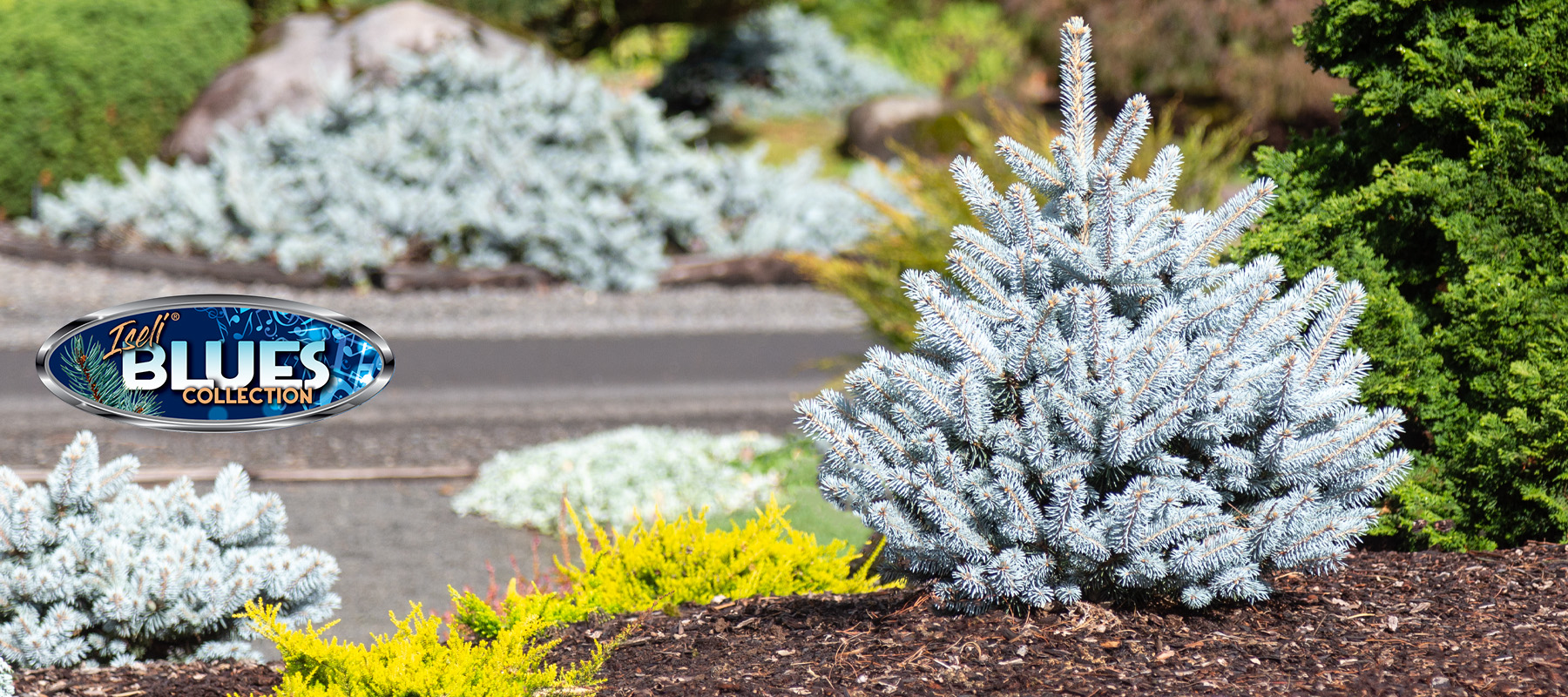
A very well-known dwarf Colorado Blue Spruce, it has an upright, broad form and silvery-blue needles that make it virtually indistinguishable from 'Montgomery'. The slow-growing, dwarf plant is globe-shaped when young, but will eventually form a leader as it matures and develop an upright, broad shape that is wider than tall. To maintain a globose or spreading habit, prune out upright or vigorous shoots. |
|
Upright Broad |
2 |
Dwarf |
Bluish Green |
A small garden tree that is wider than tall, this slow-growing, dwarf Colorado Blue Spruce boasts a refined texture and a softer color: muted blue-gray-green. For those who want the form of 'Montgomery' in a more subtle color palette. From Hillside Nursery, Lehighton, Pennsylvania. |
|
Upright Broad |
2 |
Large |
Blue |
This superb, stately tree is the most eye-catching of the Colorado Blue Spruce cultivars. Its long, thick, bright silver-blue needles have earned it the reputation as an exceptional specimen tree, with a full, pyramidal form. Iseli Nursery stakes all young plants to ensure a uniformly upright habit. |
|
Upright Narrow |
2 |
Large |
Blue |
A strongly fastigiate habit and excellent blue foliage make this narrow selection from Iseli Nursery the ideal blue accent or focal point where space is a consideration. Its posture suggests a fat, steel-blue cigar or a tall, lean sentinel in the landscape. |
|
Upright Broad |
2 |
Large |
Blue |
Unusual needles on the shoots of this open, pyramidal tree suggest a fox's tail. The blue needles vary in length on each shoot, tapering from longer at the base to shorter at the tip. According to the late Dr. J.C. Raulston of North Carolina State University, this cultivar displays greater adaptability to the climate of the southeast than other Colorado Blue Spruce selections. Although lanky when young, it matures into a stylish, broad, upright tree. |
| Picea pungens 'Kosteri' |
Upright Broad |
2 |
Large |
Blue |
Freedom of expression allows this well-known Colorado Blue Spruce to develop an individual form that ranges from prostrate to upright and even sweeping. Since it is a somewhat impetuous and unpredictable tree when young, we encourage individual forms to define themselves in youth. As each unique form matures, a leader develops and an elegant blue tree emerges. Its fine attributes include cold hardiness, drought tolerance, and adaptability. |
|
Globe Shaped |
2 |
Dwarf |
Blue |
Steel-blue needles and horizontally-layered branches make 'Lundeby's Dwarf' a neat and reliable landscape conifer that becomes wider than tall with age. A rare form of Colorado Blue Spruce, it stays compact and provides an attractive mounding form that stays in scale, even in small urban and suburban gardens. Discovered by Lundeby Nursery in North Dakota, it is useful as part of a foundation planting, as a focal point or in a rock garden or container. |
| Picea pungens 'Lutea AA' |
Upright Broad |
2 |
Intermediate |
Yellow |
An unusual sun-lover, this selection from the Arnold Arboretum, Boston, Massachusetts, puts on random patches of soft-yellow that stand out against the otherwise powder-blue needles. Trees display more yellow when they get more sun, as if the rays of the sun are reflected from the needles. Where shaded, the foliage darkens to blue-green on this true conversation piece for the conifer collector. |
|
Spreading |
2 |
Intermediate |
Green |
This tough, spreading Colorado Spruce stays low and blankets the ground with beautiful, healthy, green foliage that displays remarkable tolerance to adverse conditions. The uniform, ground-hugging plant performs best in full sun. Use it to shield an exposed bank or other site that takes the brunt of harsh weather. The name, which translates to "green table", suggests color and form and hints at the plant's indomitable character. |
|
Upright Broad |
2 |
Dwarf |
Blue |
This outstanding and industry standard silver-blue spruce was originally part of the conifers accumulated by dedicated collector, Col. R.H. Montgomery. Prior to selling his Greenwich, Connecticut, estate, he donated his entire collection to the New York Botanical Garden, and this Picea pungens was named to honor him during the dedication of the Montgomery Conifer Collection in May, 1949. The original plant can still be seen there today. The slow-growing, dwarf spruce is globe-shaped when young, but it will eventually form a leader as it matures and develop an upright, broad shape that is wider than tall. |
|
Globe Shaped |
2 |
Dwarf |
Green |
A bright-green, flattened mound with dense branching and profuse budding, this dwarf selection offers a unique texture and color contrast that results from shiny needles and a clustered, light-green bud break on the ends of branches. From Joe Cesarini, Long Island, New York. |
|
Weeping |
2 |
Large |
Blue |
Blue needles and dense, weeping branches create a beautiful, cascading effect that is reminiscent of a waterfall. Whether staked upright and allowed to drape or simply permitted to ramble along the ground, 'Pendula' makes a graceful, dramatic statement in the garden. |
|
Prostrate |
2 |
Intermediate |
Blue |
Similar in color to 'Pendula', this spreading, undulating groundcover produces a striking effect when planted to drape over a rock wall or slope. The attractive blue form makes an excellent alternative to groundcovering junipers. |
|
Globe Shaped |
2 |
Dwarf |
Green |
Discovered at Iseli Nursery as a witches' broom growing on Picea pungens 'Green Spire' (a narrow upright form). 'Roundabout' is a compact, green, garden orb. Perhaps its color is better described as viridian - a sort of bluish green. Whatever color you perceive, it is a super hardy, symetrical addition to the garden - like a spherical topiary that never needs shearing. Slow growing with needles in perfect scale to its small size, 'Roundabout' is a winner for today's smaller landscapes. Loves full sun and well drained soil. |
|
Upright Broad |
2 |
Dwarf |
Blue |
Stunning blue needles, slow growth rate, and classic conical form make this dwarf spruce an ideal plant for the modern landscape. Only about one-fourth the growth of its large parent, it is the perfect small form of Colorado Blue Spruce, and it requires little maintenance or pruning to keep its tidy shape. Found as a seedling selection by Sester Farms, Gresham, Oregon. Best in full sun. |
|
Weeping |
2 |
Large |
Blue |
This blue, weeping selection has a strong, upright leader and pendulous side branches that drape down and form a dense, irregular curtain of foliage. The plant stays fairly narrow as it continues to develop its weeping character, beauty and height as it ages. |
|
Globe Shaped |
2 |
Dwarf |
Blue |
A dwarf, blue, bun-shaped selection, this slow-growing plant has relatively long, widely-angled needles. It reliably maintains a mounding or globose habit, without any tendency to develop a leader. |
|
Spreading |
2 |
Dwarf |
Green |
A slow-growing dwarf, this flat, spreading Colorado Spruce boasts a remarkable color that defies description -blue/gray/green---you decide. Its form is nest-like, with short, horizontal branches of thick, tough needles that overlap and provide reinforcement for the structure. Hardy enough for extremely cold climates, it is an ideal choice for a low, colorful sphere of color in garden bed or large container. |
| Picea pungens x glauca 'Ali' |
Upright Broad |
2 |
Large |
Green |
The product of forestry research by Don Fowler in New Brunswick, Canada, this selection is intermediate in characteristics between pungens and glauca, with short, dark green needles, a uniform pyramidal shape and moderate growth rate. The natural Christmas-tree shape and sturdy constitution make it a desirable addition to landscapes where hardiness and adaptability are required. Named by Mr. Fowler for his granddaughter. |
| Picea purpurea |
Upright Broad |
4 |
Intermediate |
Bluish Green |
The needles of this lovely garden tree are short and dark-green with pale-gray undersides. They are pressed closely to the light-tan stems, especially on terminal shoots. The mid-size, formal, pyramidal spruce makes a dramatic addition to the garden, and its beauty is augmented with striking purple-violet young cones. Formerly Picea likiangensis var. purpurea. |
|
Upright Broad |
4 |
Large |
Bluish Green |
Geographic variety accounts for the unique characteristics of this beautiful Chinese Spruce (formerly listed as Picea likiangensis). It has longer dark-green needles with gray undersides, light, hairy stems and a faster growth rate than Picea purpurea. |
| |
Upright Broad |
5 |
Dwarf |
Bluish Green |
'Papoose' has sharp, two-tone, blue-green needles. Late in spring, clusters of buds open at the branch tips and form blossom-like bursts of foliage. The slow-growing tree displays a dense, globose habit when young, but produces a leader with age and becomes a tight, upright, broad shape. Found by Gordon Bentham, Vancouver Island, British Columbia, it is considered deer resistant. |
|
Upright Broad |
5 |
Dwarf |
Bluish Green |
The name of this compact Sitka Spruce, which means "silver dwarf", says it all. It refers to the plant's outstanding needle color and its reliable, slow-growing habit. The plant's very dense, very blue needles display a unique reversal from the norm: the two-tone, blue-green effect results from silvery-blue on the tops of needles with dark green on the reverses. Similar in size and shape to 'Papoose', the striking foliage of this selection boasts a better blue. Resists browsing deer. |
|
Spreading |
3 |
Dwarf |
Bluish Green |
This hybrid, nest-type spruce combines the shorter, softer needles of Picea mariana and the two-color needles of Picea omorika. Attractive and super hardy, the distinctive selection produces slim, straight shoots on horizontal branches, so it stays low, slowly building height and width with age. Use the adaptable, hardy conifer for year-round, spreading structure in garden beds. |
