

Iseli Nursery

  • Increase font size
  • Default font size
  • Decrease font size

Dwarf Conifers
small-scale statements

By Elizabeth Petersen

Patio containers filled with dwarf and miniature conifers provide year-round color and excitement.Patio containers filled with dwarf and miniature conifers provide year-round color and excitement.In the Pacific Northwest, conifers show off their powerful structure, quiet beauty and indomitable character during winter. They stand out under gray skies and hold their own against wind, rain and ice. Gardeners, even those with tiny spaces, can enjoy the strength and charm of these Northwest icons at home with diminutive versions of these forest trees, collectively called dwarf conifers. A wide color range of foliage and numerous shapes and textures mean that gardeners can use dwarf conifers for an accent to make a statement or to draw attention to detail.

FABULOUS FALSE CYPRESS 

The Hinoki cypress (Chamaecyparis obtusa) is an elegant tree that is wider at the base and narrower toward the top with upright foliage. For this effect on a small scale, try 'Kosteri', a tidy green form that mixes well with perennials or 'Verdoni', a dependable bush selection with yellow foliage that does not burn in full sun. These cultivars can reach eight feet tall and six feet wide, but they will do so very slowly, putting on just a few inches of growth each year. 'Templehof' is a dwarf Hinoki cypress that turns bronzy in winter. 'Filicoides Compacta' has beautiful fern-like foliage on a bigger but slow-growing tree (to10 feet). Its pyramidal form makes a graceful entryway accent. Hinokis do well in full sun, but they will also tolerate some shade.

Chamaecyparis pisifera 'Golden Pin Cushion'Chamaecyparis pisifera 'Golden Pin Cushion'Chamaecyparis pisifera 'Golden Pin Cushion' is a slow-growing golden bun that colors best in full sun. It will stay very small, reaching less than three feet in 15 years. For a fascinating column, try Chamaecyparis nootkatensis 'Strict Weeping'. Although this tree will get tall, it is very narrow and makes an excellent focal point with an unusual habit: The foliage hangs down tightly against the trunk.

SASSY SPRUCES 
Spruces are beautiful conifers, readily recognized for their popular evergreen character, often in the conical shape of Christmas trees. This large genus includes the Norway spruce (Picea abies), the White spruce (Picea glauca), the Colorado spruce (Picea pungens), and the venerable Sitka spruce (Picea sitchensis). All of these also come in smaller versions that are hardy and easy to grow. Typically, spruce foliage consists of stiff needles, but there the similarity ends. Size, shape, texture and color are highly variable, which means gardeners can find a spruce for almost every need. Grow spruces in sun or light shade, and watch for insects following mild winters.

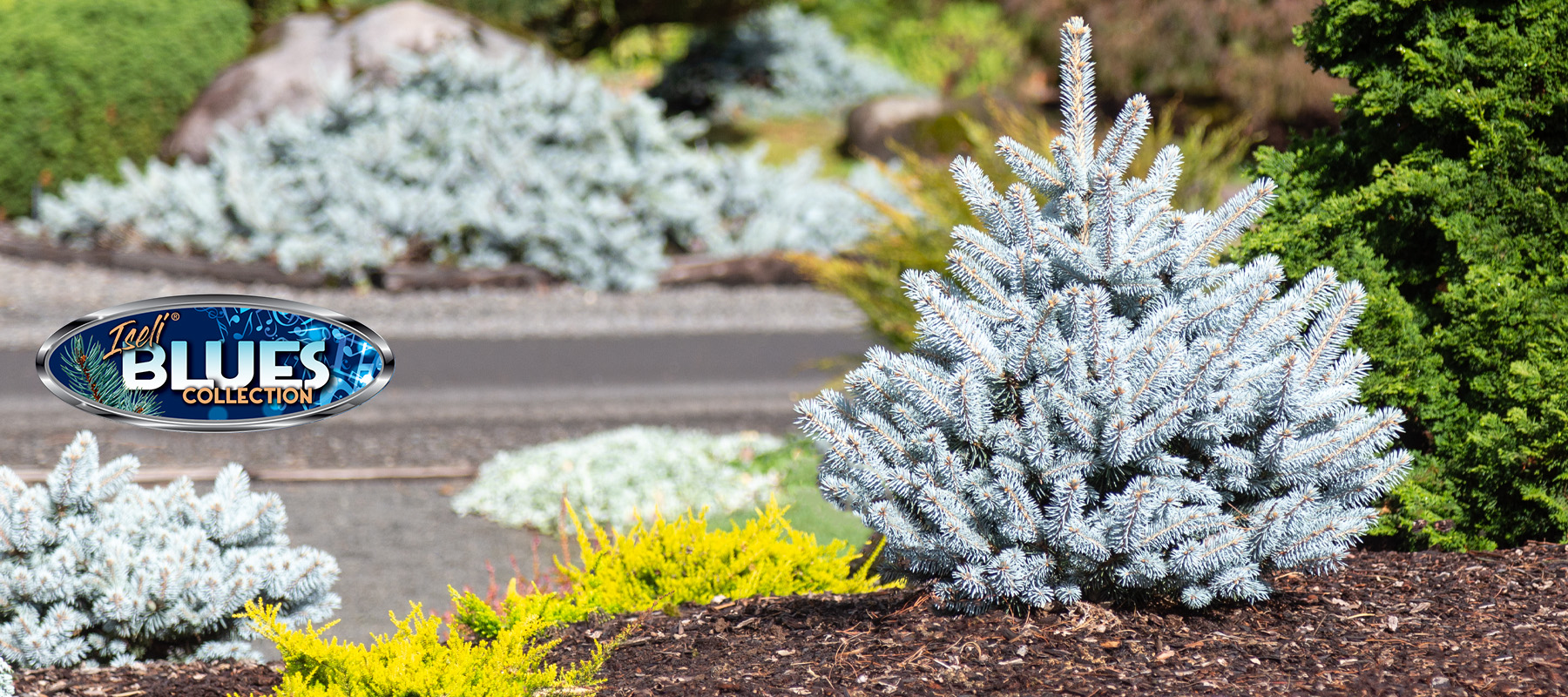
Picea pungens 'Montgomery' is an outstanding dwarf blue spruce. It grows slowly to about six feet tall and wide in 15 years, forming a tree that is perfectly conical, gorgeous and silver blue. Picea sitchensis 'Tenas/Papoose' has interesting two-tone needles that are green on one side and white on the other, producing a shimmering blue effect. Deer avoid the sharp needles of this spruce.

Picea glauca 'Jeans Dilly'Picea glauca 'Jeans Dilly'Picea glauca 'Jean's Dilly'® (pronounced John's Dilly) grows much more slowly than other dwarf Alberta spruces and is considered so outstanding that it was named in honor of Jean Iseli, the founder of Iseli Nursery who had a passion for dwarf conifers. It will reach less than four feet in 20 years.

Nest-type spruces are described as looking like living rocks. Try Picea abies 'Little Gem', with tiny green needles and a tight dense habit that will reach about two feet tall and three feet wide in 20 years. The new spring growth is a gorgeous light green. 'Pumila' is also low and wide, spreading to about six feet in 20 years. It has dark-green foliage on a more rounded plant is an excellent choice for foundation plantings. A striking feature of 'Pumila' is that way the shoots all angle up and out uniformly, unlike other nest-type spruces.

PERFECT PINES
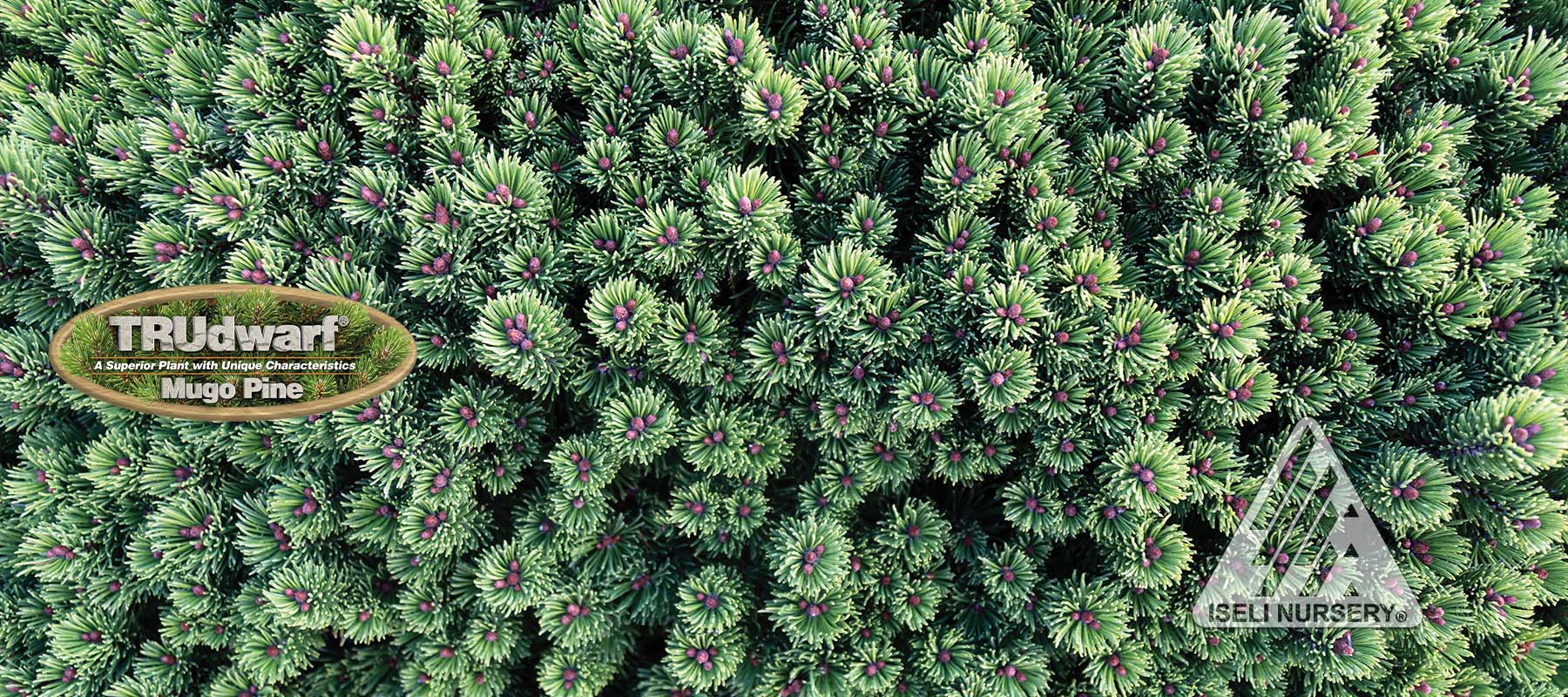
It's hard to pass up Pines. Their lovely long needles and open habit make them excellent garden choices. For a low-growing rounded mound in a bright glowing green, you can't do better than Pinus densiflora 'Low Glow'. Pinus mugo 'Slowmound' is a dwarf mugo pine that forms a dense dark-green mound. True to its name, it will reach three feet tall and four feet wide in 20 years. Pinus thunbergii 'Thunderhead' pushes the limits of "dwarf", but it is a great selection. It has brilliant-white candles in the spring and again in the fall. It can be kept smaller by breaking off half of each new candle before the needles open.

HANDSOME HEMLOCKS
Mountain hemlock (Tsuga mertinsiana) is a small to medium tree with irregular, handsome growth. Renowned natives expert Arthur Kruckenberg recommends the mountain hemlock as the "very best native conifer for the small garden" because of its slow growth, informal branching pattern and fine soft-textured blue-gray-green needles.

Tsuga Canadensis cultivars are also excellent for garden use. Try 'Bennett', which has light-green, finely textured needles on a broad shrub with layered arching branches. 'Cole's Prostrate' is very low, with weeping branches that spread out and conform to the shape of rocks in a rock garden. 'Gentsch White' is a variegated shrub with white new growth. It benefits from shearing in late winter to maintain its compact size and to encourage the brilliant white tips.

AND ANOTHER THING
For a smaller version of the Deodar cedar, try Cedrus deodara 'Prostrate Beauty', which was discovered at Iseli Nursery in 1979. The true-blue color and spreading, nearly flat form make 'Prostrate Beauty' a striking choice. To keep the prostrate shape, watch for the plant to develop an upright leader and prune it out.

Tsuga canadensis 'Cole's Prostrate'Tsuga canadensis 'Cole's Prostrate'Cupressus sempervirens 'Tiny Tower' is a dwarf Italian cypress with a tight narrow shape. This unique form has dense bluish-green foliage that will keep its columnar shape without pruning. For another tight narrow column, try Juniperus communis 'Compressa'. This soft-green spire grows very slowly, reaching about six feet in 15 years.

Cryptomeria japonica (Japanese cedar) is irregularly pyramidal with short stiff foliage and peeling reddish bark. It prefers moist soil and will perform well in full sun or part shade. Try 'Tansu', a selection that stays very small. Or 'Vilmoriniana', a round form with rich-green foliage that turns bronze-purple in winter. Both will do well in containers or rock gardens.

Elizabeth Petersen is a freelance writer and writing coach who gardens in West Linn. OR, surrounded by towering Douglas firs and cedars. Contact her at  This e-mail address is being protected from spambots. You need JavaScript enabled to view it

This article was originally published in the Nov/Dec 2001 edition of Garden Showcase magazine - reproduced with permission.


Find more about Weather in Boring, OR

Conifer lovers

We have 18 guests online
